Showing posts with label tibetan. Show all posts

Tuesday, August 06, 2013

Drepung Monks Sand Peace Mandala


A world peace sand mandala created by the Drepung Gomang Monks during their Sacred Arts Tour. This tour has a four-fold purpose:

To make a contribution to world healing and peace by sharing unique Tibetan Buddhist teachings, sacred religious performances, chanting, and Tibet's unique identity and treasures of culture and authentic traditions.

To offer prayer with all:  “Recognizing well, and very deeply, that there have been great tragedies in every part of the world, we want to share our sympathy and prayers together with you as human beings sharing this planet and sharing the future of this home of ours.”

To generate a greater awareness of the endangered Tibetan civilization and human rights abuses by the Communist Chinese since 1959. As the situation in Tibet is becoming more desperate by the day, due to massive displacement of Tibetans by Chinese citizens sent there by the Communist government, and ever new rules and difficulties, especially at the monasteries, we need your help now.

To raise support for the refugee monks' community in south India for proper food, improvement in health and hygiene and for providing better education facilities for the monk students. Here's an informational video:

Monday, January 28, 2008

Sun Yantra Wallpaper


This beautiful desktop wallpaper is from the sanatansociety.com

Wheel of Life Mandalas

Host unlimited photos at slide.com for FREE!

Beautiful Wheel of Life Thanka paintings from Sari Magic.

Host unlimited photos at slide.com for FREE!

Host unlimited photos at slide.com for FREE!

Host unlimited photos at slide.com for FREE!

Host unlimited photos at slide.com for FREE!

Host unlimited photos at slide.com for FREE!

Host unlimited photos at slide.com for FREE!

Host unlimited photos at slide.com for FREE!

Wheel Of Life

Paintings like this are usually found in the vestibule of Lamaist temples. It is said that the Buddha himself drew this diagram in the sand in order to explain to his disciples the Buddhist conception of life, death and rebirth.

The Wheel itself is held in the clutches of a demon, who symbolizes impermanence. In the hub of the wheel are a cock, a snake, and a pig, symbols of lust, anger and ignorance respectively, the three cardinal sins in Buddhism.

In the rim around this hub is a narrow band, one half showing the upward path leading to the superior worlds of rebirth, and the other showing the downward path leading to the inferior worlds of rebirth. Beyond this narrow band this Wheel is divided into five segments. These segments depict the different worlds of rebirth.

At the top left is the Region of the Gods and Asuras, and to the right, the Region of man. These are the superior worlds of rebirth. In the center below is the hell region, wherein Yama, the King of the dead, presides over the judgement. At the left is the Region of animals, and at the right, the Region of the tortured spirits. The last three regions are inferior worlds of rebirth.

In the outer rim are twelve scenes, which the Buddha called the usual nexus, the chain of cause and effect, or the reasons for transmigration. These symbolize the various stages through which man passes from birth, namely:
  1. Ignorance
  2. Conformations
  3. Consciousness
  4. Self-consciousness
  5. Senses
  6. Contact
  7. Desire
  8. Indulgence
  9. Married life
  10. Maturity
  11. The birth of an heir
  12. Decay and death

And then rebirth through countless existences. At each death man is reborn according to his Karma, into one or another of these six worlds, until he, like Buddha, through enlightenment reaches perfection and, no longer "bound to the wheel," passes on to Nirvana to become one with the Universal spirit.

The painting of the Wheel is very complex; the profound symbology must be carried out perfectly. The joys and punishments in the six regions of rebirth are vividly portrayed in miniature. In the outer rim the various incidents of the casual nexus are also represented in minute detail.

Monday, January 21, 2008

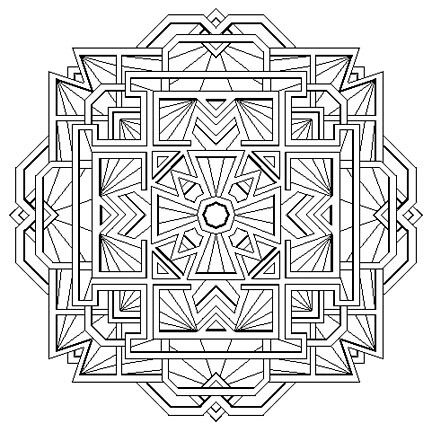
Tibetan Mandala for Coloring


Tibetan Mandala for Coloring, originally uploaded by Shirley Two Feathers.


Here is a nifty Tibetan style mandala to color. You can download the image at Flickr and then print it out and color it. If you have any problems with the download, let me know and I'll do what I can to help.

Have fun!

Wednesday, January 02, 2008

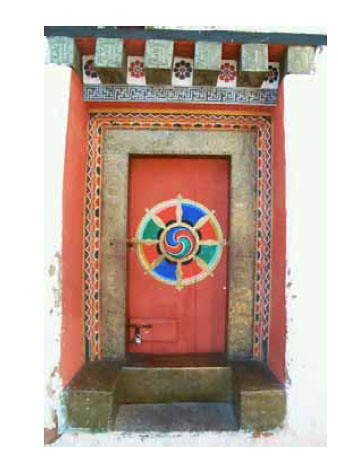
Tibetan Doorway with Mandala


mandala door, originally uploaded by Shirley Two Feathers.

I thought this was really cool. I looked and looked but couldn't find any more pictures of mandalas painted on doors to go with it. So here it is.

Sunday, July 08, 2007

Sri Yantra Mandala Meditation

The secret key to using Yantras in meditation is Resonance. The process of Resonance is established by mental focus on the image of the Yantra. As long as the mind is tuned into the specific mood associated to that Yantra, the energy flows, but when the Resonance is stopped, the energy disappears.

Instructions for Shri Yantra Mandala meditation:

1. Hang the Shri Yantra mandala on a wall facing North or East, placing the center of the Yantra at the level of your eyes...

I am so sorry to do this to you, but this post has been moved to my new website, Mandala Madness, hosted at shirleytwofeathers.com, and can be found in its entirety here: Sri Yantra Mandala Meditation
Related Posts Plugin for WordPress, Blogger...